
FocusLock — Premium Landing Page
A Next.js 16 dark-mode landing page for FocusLock with FR/EN routing, dynamic OG images, lead capture to n8n, and complete legal pages — production-ready and globally optimized.
Discuss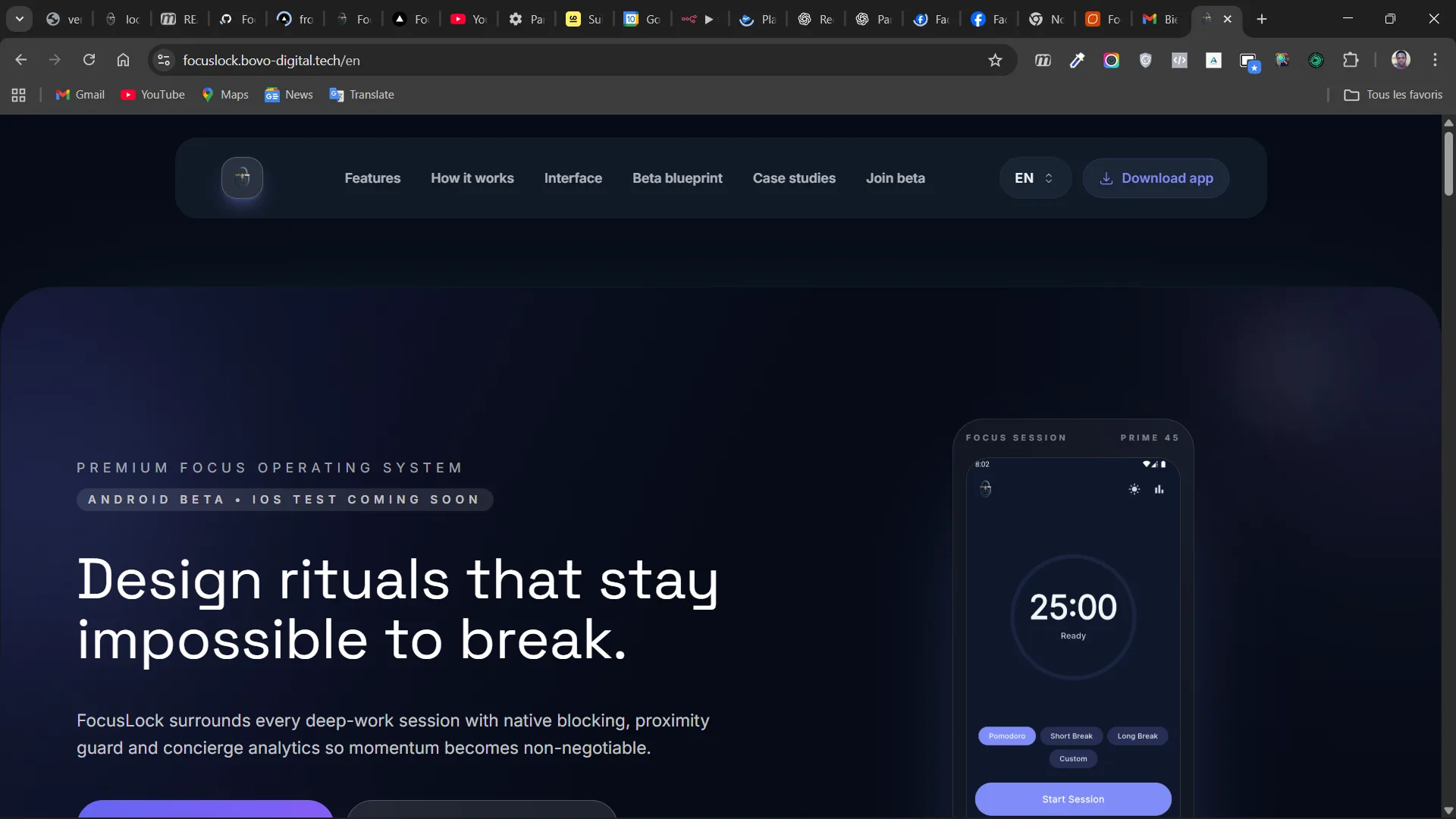
About this project
FocusLock's web presence — a premium Next.js 16 landing page built for conversion and SEO in two languages
A mobile app is only half of the product. The other half is the landing page that convinces a visitor to download it. For FocusLock — a professional-grade concentration operating system — we built a premium web experience on Next.js 16 (App Router) and React 19, with full internationalization, a production-grade SEO layer, and a visually consistent dark design that matches the app's identity from browser to home screen.
The technology and architecture
- Modern stack: Next.js 16 with App Router, React 19, TypeScript, and Tailwind CSS 4 — the contemporary stack for performant, maintainable marketing sites that feel fast on every device.
- Full internationalization: complete FR/EN support via next-intl, with localized routing (/fr, /en), language detection, and clean URL structure for both SEO and shareable links.
- Exclusive dark theme: the brand identity requires dark-only design. We enforced this at the architecture level via next-themes with the light theme deliberately disabled, keeping every touchpoint on brand.
- Optimized SEO: dynamic Open Graph metadata, OG images generated on the fly through Next.js API routes, language-specific SEO, and canonical URL handling for each locale.
The main features of the site
- Premium landing page: a modern dark design with smooth animations and sections engineered for conversion — hero, social proof, feature tour, testimonials, final CTA.
- Lead capture form: connected to n8n for automatic routing of new leads into the marketing funnel, without any manual handling.
- Complete legal pages: privacy policy, terms of use, cookies, legal notice, security, compliance, DPA, GDPR and CCPA rights, acceptable use policy. A mobile app that handles focus data and integrates deeply with the OS is held to a high legal bar, and the site reflects that.
- Information pages: service status page, contact, FAQ, support, downloads — each one indexed and optimized individually for discovery.
- Custom error pages: 404, 500, and other HTTP error codes, all designed in the same visual language so an error screen still feels like part of the product.
- Responsive design: every breakpoint is tested and polished, from narrow Android devices to wide desktop monitors.
- Performance optimizations: Server Components for static pre-rendering, automatic image optimization, lazy loading, and code-splitting, so every page meets modern Core Web Vitals thresholds.
Technical architecture
- Modular structure with clear separation between landing, layout, and UI components.
- Server Components for static pre-rendering, with explicit translation loading for each locale — avoiding the common pitfall of shipping duplicate translation bundles to the client.
- Client Components for interactive islands, using the useTranslations() hook from next-intl to access localized strings cleanly.
- Vercel configuration tuned for optimized deployment: preview environments per branch, edge caching, analytics integration, and automatic image optimization at the CDN layer.
- Environment variables for every integration (n8n webhook URLs, download URLs per platform, support endpoints, concierge contact), so no secret ever leaks into the repository.
Advanced internationalization
- Complete, linguist-reviewed translations across every page and section.
- Language-specific SEO with metadata adapted per locale — not just mechanically translated, but rewritten to match search intent in each language.
- Dynamic Open Graph images generated via API routes, producing visually rich link previews in both French and English on social platforms.
- Transparent localized routing that preserves user intent across language switches — switch from /fr to /en on the pricing page and you land on the pricing page, not the home page.
What this project demonstrates
This landing page is a showcase of what a modern web presence should look like in 2026: a Next.js 16 App Router architecture, React 19 server components, a strict internationalization strategy, real technical SEO (not just meta tags), and a premium visual language that is consistent from the app icon to the legal footer.
Technology stack
- Next.js 16 (App Router) and React 19.
- TypeScript for end-to-end type safety.
- Tailwind CSS 4 for the design system.
- next-intl for internationalization and localized routing.
- next-themes for enforced dark theme.
- Server Components for performance and SEO.
- Vercel for deployment and edge caching.
- n8n for the lead-capture pipeline.
Ready to build your premium website? Discover our Premium Web Development service →
Technologies used
Similar projects
Explore other case studies in the same category.
%3Ano_upscale()%2Fuploads%2Fmedia%2Fpicture%2Fb773fffa-0add-4042-97b8-161f859aad9a%2Ftmp%2Fprojects%2Fb773fffa-0add-4042-97b8-161f859aad9a%2Fcopie-de-comeup-67cbf72ebd999.png&w=3840&q=75)
Web Calculator for Security Costs
An interactive security cost estimator that converts website visitors into qualified leads — PHP/JS tool with dynamic breakdowns and a built-in free consultation form.
View project%2Fuploads%2Fmedia%2Fpicture%2Fb773fffa-0add-4042-97b8-161f859aad9a%2Ftmp%2Fprojects%2Fb773fffa-0add-4042-97b8-161f859aad9a%2Fwordpress-plugin-for-partner-api-integration-callback-form-67c95ae532544.jpg&w=3840&q=75)
WordPress Plugin for Partner API Integration
A custom WordPress plugin that fires a partner API callback the instant a prospect submits your Elementor form — secure, conflict-free, sandbox-tested, and fully documented.
View project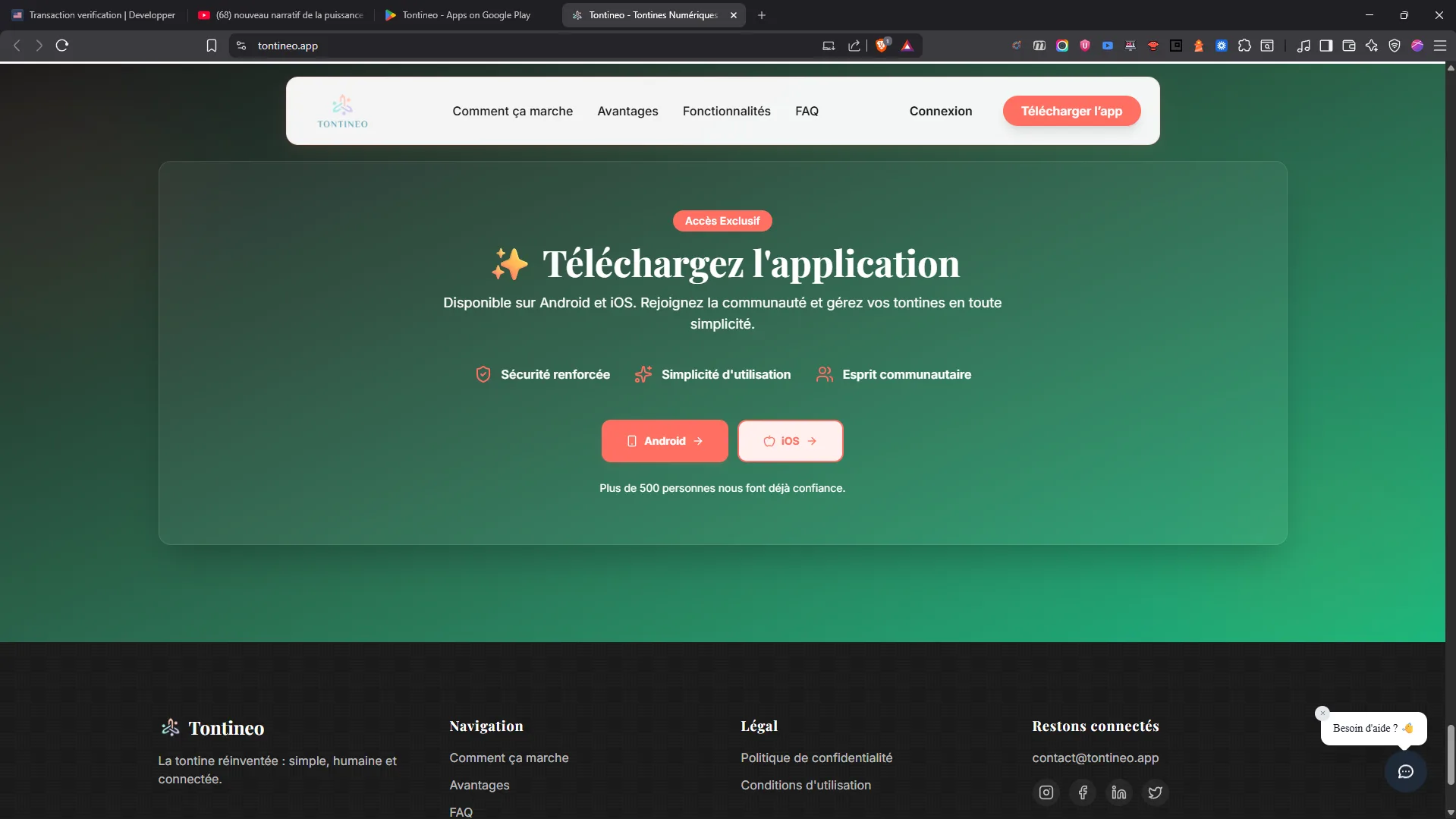
Tontineo - Premium Landing Page
A premium landing page that positions Tontineo as the future of group savings — conversion-optimized sections, smooth animations, and direct store links to drive app downloads.
View projectRelated blog articles
Dive deeper into the topic with our guides and tutorials.

Next.js 15 and React 19: The New Era of Web Development in 2025
Discover how Next.js 15 and React 19 are revolutionizing web development with stable Turbopack, mature Server Components, the React Compiler, and Server Actions. A deep dive into the changes redefining performance and developer experience.
Read article
Tutorial: Migrate Your MCP Server to the 2026-07-28 Stateless Spec
Practical guide to migrate a production MCP server to the 2026-07-28 spec: remove Mcp-Session-Id, stateless Streamable HTTP, load balancer setup, breaking changes checklist, and test procedures.
Read article
Next.js 16.3: Turbopack Cuts Memory by 90%, Makes Room for AI Agents
Next.js 16.3 arrives in preview with a Turbopack that uses 90% less memory, a Rust-based React compiler, and a suite of tools built for AI coding agents. Should you migrate right now?
Read article