
Complete E-Learning Platform with Next.js 15, TypeScript & SEO Optimized
Aura Academy: a full-stack Next.js 15 e-learning platform with gamification, EditorJS content, NextAuth, Schema.org SEO, and dynamic sitemap — deployed on Vercel, built to scale.
Discuss
About this project
Aura Academy — a complete, production-grade e-learning platform built on Next.js 15, TypeScript, and rigorous SEO
E-learning platforms have become a commodity — except when they are not. The difference between a generic LMS and a platform that actually grows is in the details: how content is created, how learners are motivated, how the platform ranks in search engines, how the architecture scales under real load. Aura Academy is a modern, performant e-learning platform built end-to-end for exactly that bar of quality. This project covered the entire stack: technical architecture, product features, gamification, analytics, SEO, and deployment.
The solution is fully live and accessible at https://aura-academy.bovo-digital.tech/.
The modern technical stack
- Next.js 15 and React 19: a modern framework with App Router, Server Components, and the latest performance optimizations. Every page is rendered server-first for fast first paint and strong SEO, with client-side interactivity layered on top where it matters.
- TypeScript: end-to-end static typing for maintainability and for reducing the class of bugs that plague loosely-typed e-learning platforms over time.
- PostgreSQL and Prisma: a robust relational database with a modern ORM. Course, lesson, module, user, progress, and achievement data all live in a properly designed schema, not in a pile of JSON blobs.
- NextAuth.js: a secure, complete authentication system supporting credential login, social providers, and session management that respects modern security practices out of the box.
- Vercel: deployment on a platform built for Next.js, with edge computing, global CDN, automatic previews per branch, and production-grade observability.
The main product features
- Advanced course management: a rich EditorJS editor with Markdown support enables instructors to create structured, interactive educational content — text blocks, code snippets, images, embedded media, quizzes. No WYSIWYG chaos, no dead-end HTML editor.
- Gamification system: points, badges, streaks, and visible progression rewards turn passive learners into active ones. The gamification layer is backed by proper domain modeling, not bolted on — so it scales to new course types without rewrites.
- Integrated analytics: detailed tracking of learner progress, completion rates, time spent per module, and course-level performance. Instructors see what works and what does not, at a glance.
- JSON import/export: easy migration and backup of courses. A instructor can export their course as a structured JSON file, version it, re-import it, or hand it to a colleague. Content is not locked into the platform.
- Interactive questions: an integrated quiz and assessment system that supports multiple question types and produces graded reports.
- Responsive interface: modern, adaptive design that works across mobile, tablet, and desktop with a cohesive experience at every breakpoint.
Complete SEO optimization
For an e-learning platform, SEO is not optional — organic traffic is often the single largest acquisition channel. Aura Academy was built from day one with SEO as a first-class concern.
- Schema.org structured data: rich JSON-LD markup for courses, educational occupational credentials, organization, and breadcrumbs. This unlocks rich results in Google and significantly boosts click-through rates from the SERP.
- Dynamic sitemap: automatic sitemap generation covers every course and page, so new content is discovered and indexed fast.
- Optimized robots.txt: precise directives for every major search-engine crawler, with allowances configured for AI-focused crawlers too.
- Open Graph and Twitter Cards: full social metadata for premium link previews when courses are shared anywhere on the web.
- Performance optimized: fast initial load times, route-level code splitting, lazy loading, and image optimization that keeps Core Web Vitals in the green.
The delivered result
Aura Academy is a production-ready, scalable, performant e-learning platform delivering a modern and engaging learning experience. The platform is live and serving real learners at https://aura-academy.bovo-digital.tech/, and demonstrates what a complete, engineered, SEO-aware LMS looks like in 2026.
Technology stack
- Next.js 15 and React 19 for the full-stack app layer.
- TypeScript for type safety.
- PostgreSQL and Prisma for the data layer.
- NextAuth.js for authentication.
- EditorJS and Markdown for content creation.
- Schema.org for structured data.
- Vercel for deployment, preview environments, and edge caching.
Ready to build your premium website? Discover our Premium Web Development service →
Technologies used
Similar projects
Explore other case studies in the same category.
%3Ano_upscale()%2Fuploads%2Fmedia%2Fpicture%2Fb773fffa-0add-4042-97b8-161f859aad9a%2Ftmp%2Fprojects%2Fb773fffa-0add-4042-97b8-161f859aad9a%2Fcopie-de-comeup-67cbf72ebd999.png&w=3840&q=75)
Web Calculator for Security Costs
An interactive security cost estimator that converts website visitors into qualified leads — PHP/JS tool with dynamic breakdowns and a built-in free consultation form.
View project%2Fuploads%2Fmedia%2Fpicture%2Fb773fffa-0add-4042-97b8-161f859aad9a%2Ftmp%2Fprojects%2Fb773fffa-0add-4042-97b8-161f859aad9a%2Fwordpress-plugin-for-partner-api-integration-callback-form-67c95ae532544.jpg&w=3840&q=75)
WordPress Plugin for Partner API Integration
A custom WordPress plugin that fires a partner API callback the instant a prospect submits your Elementor form — secure, conflict-free, sandbox-tested, and fully documented.
View project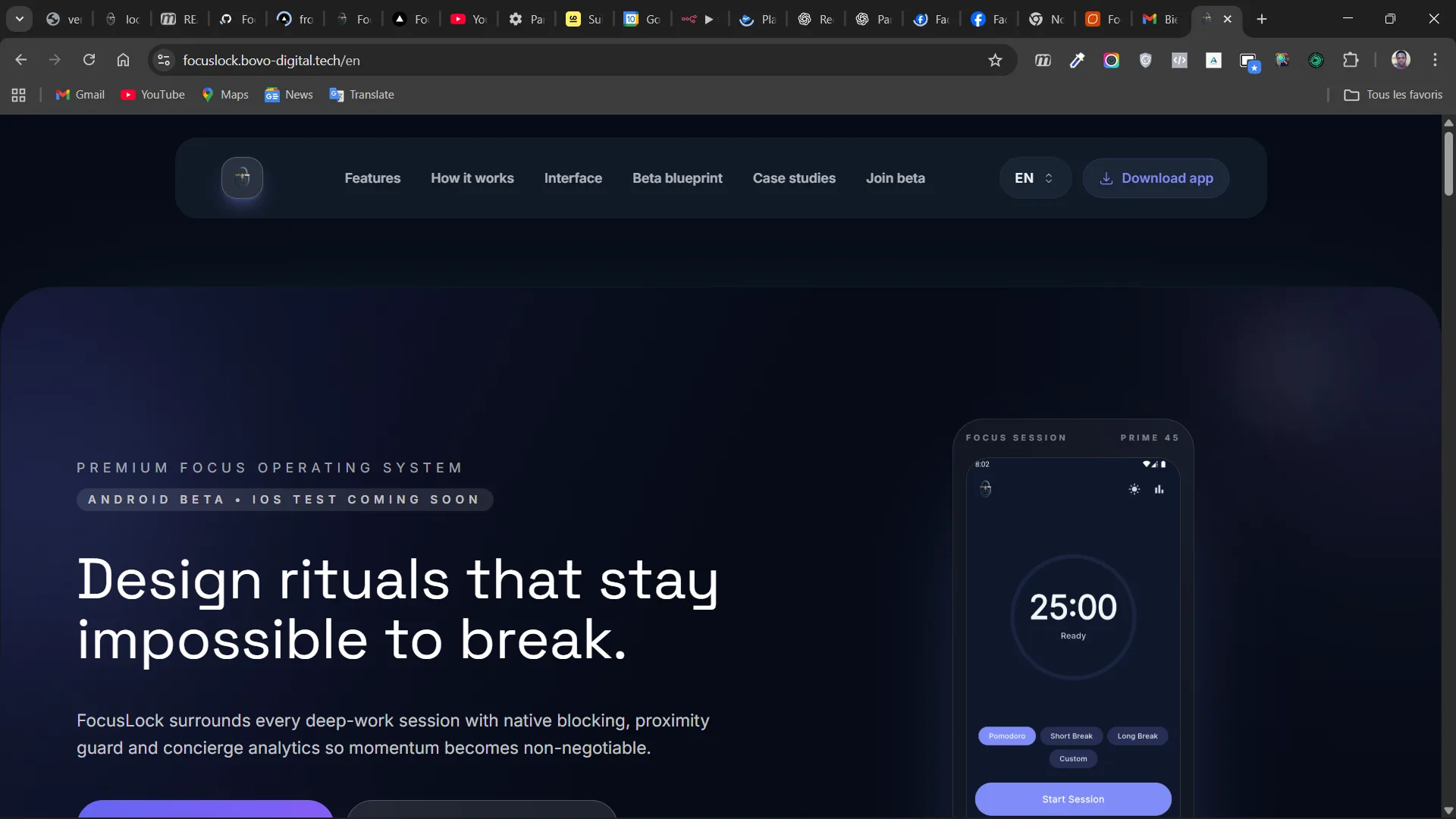
FocusLock — Premium Landing Page
A Next.js 16 dark-mode landing page for FocusLock with FR/EN routing, dynamic OG images, lead capture to n8n, and complete legal pages — production-ready and globally optimized.
View projectRelated blog articles
Dive deeper into the topic with our guides and tutorials.

Tutorial: Migrate Your MCP Server to the 2026-07-28 Stateless Spec
Practical guide to migrate a production MCP server to the 2026-07-28 spec: remove Mcp-Session-Id, stateless Streamable HTTP, load balancer setup, breaking changes checklist, and test procedures.
Read article
Agent-Native Web Development in 2026: Next.js, Prisma, and What Changes for Your Stack
Next.js ships an MCP server, Prisma reinvents itself with agent-ready data contracts, new Rust and Zig frameworks emerge. How to choose your web stack in 2026 amid the agent-native wave.
Read article
Next.js 16.3: Turbopack Cuts Memory by 90%, Makes Room for AI Agents
Next.js 16.3 arrives in preview with a Turbopack that uses 90% less memory, a Rust-based React compiler, and a suite of tools built for AI coding agents. Should you migrate right now?
Read article